If you are asking what age your child should start martial arts, here is the straight answer: there is no magic number. There is usually a sensible starting window, and it depends less on hype and more on whether your child can follow instructions, join a group and cope with a bit of structured challenge.
For most West Bromwich parents, that is a much more useful way to look at it. You are not trying to win a race to start earliest. You are trying to choose the point where training is likely to feel positive, manageable and worth repeating next week.
There is no perfect age, but there is a sensible starting point
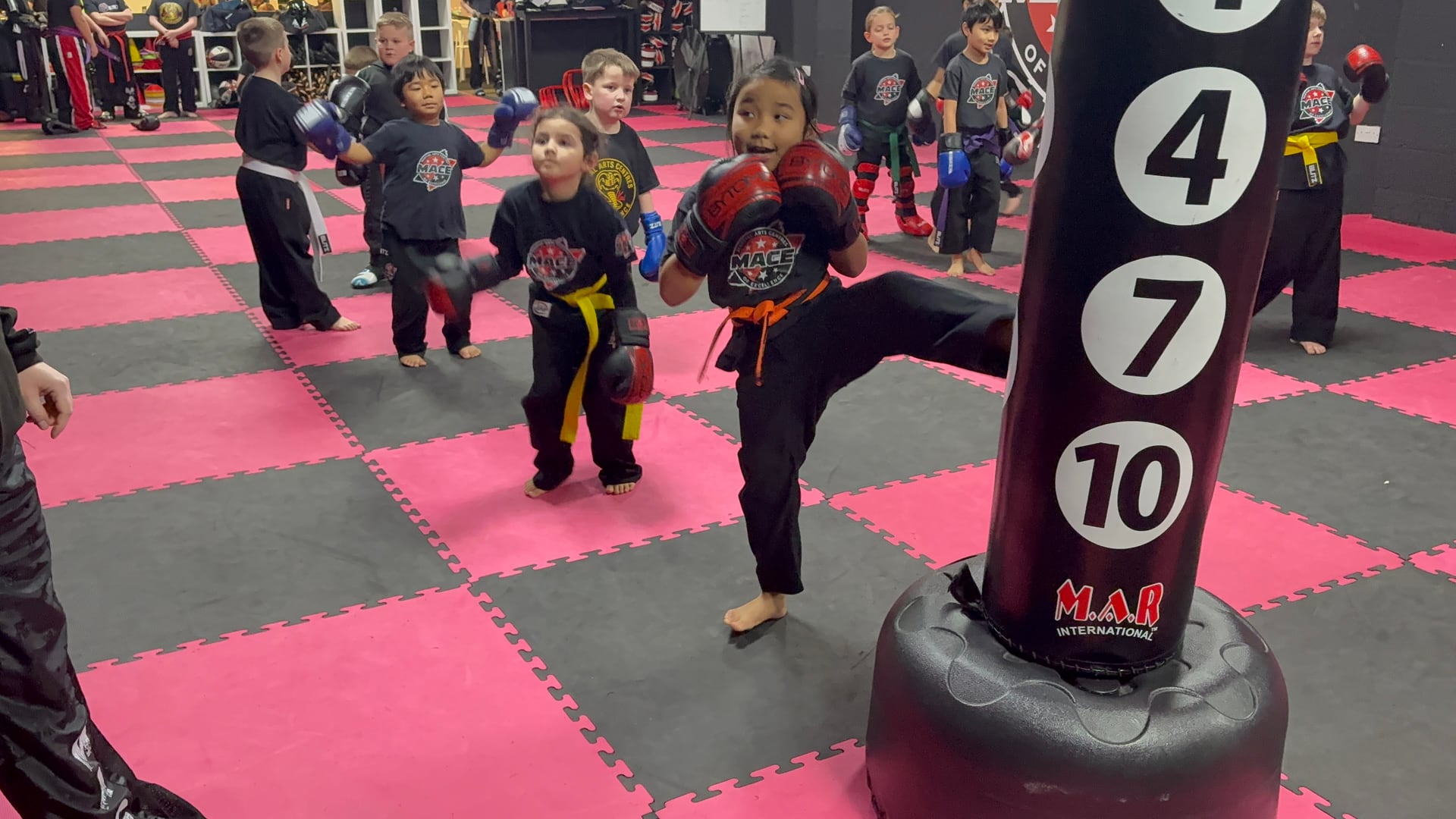
The current public MACE programme pages start children at age 4, with Dragons for ages 4 to 7 and Cadets for ages 8 to 12. That is a practical split because children at those stages usually need very different coaching.
For younger children, the aim is not to make them look like miniature fighters. It is to help them listen, move well, take turns and leave class feeling they managed something. For older children, you can ask a bit more from attention, coordination and technical detail.
General health guidance points the same way. The NHS says children aged 3 to 4 should build plenty of movement into the day, while the updated government guidance for ages 5 to 18 says children should average at least 60 minutes of moderate-to-vigorous activity a day across the week. Martial arts can be part of that picture, but the class still has to suit the child in front of you.
Ages 4 to 7: build the basics first
If your child is in the 4 to 7 range, a good martial arts class should feel structured without becoming heavy. This is the age where you build habits: standing in place for a moment, listening when the coach speaks, copying simple movement, waiting for a turn and getting used to trying again when something feels awkward.
That is why a class like Dragons matters. The coaching has to meet younger children where they are. Short instructions. Simple wins. Enough movement to keep them engaged, but enough structure that the class still teaches something useful.
If your child is only just turning 4, ask yourself a practical question. Can they separate from you for a class, follow two or three simple instructions in a row and keep trying when they do not get it right first time? If yes, the age may be fine. If not, waiting a little can be the smarter move.
Ages 8 to 12: more challenge, more detail, more progress
By 8, 9 or 10, many children are ready for a bit more. They can usually listen for longer, deal with more sequence, and understand correction without taking it personally. That opens the door to more technical work and more measured challenge.
For that stage, Cadets and Kids Boxing are usually the more natural fit at MACE. The aim is still beginner-friendly coaching, but the work can become more focused. Children at this age often enjoy feeling that they are learning real skill rather than just being kept busy.
This is also why 8 or 9 is absolutely not too late. In fact, some children start better at that age than they would have at 4 or 5, because they are more ready to take coaching and make use of it.
Readiness matters more than the birthday
Parents sometimes get stuck asking whether their child is the right age when the better question is whether they are ready enough for the kind of class you are choosing.
Signs that usually matter more than the exact birthday are simple. Your child can follow a short instruction. They can wait a turn without melting down. They can stay in a group. They enjoy movement. They can hear a correction without shutting off completely. None of that means they need to be perfect. It just means a coached class has a fair chance of going well.
If those signs are not there yet, that is not failure. It just means the right answer might be later, or it might be a gentler first step.
What this looks like for West Bromwich and Sandwell families
For families in West Bromwich, Smethwick, Oldbury, Wednesbury, Tipton, Great Barr and the wider Sandwell area, the practical move is to stop chasing the idea of a universal best age and start looking for the right class structure.
At our West Bromwich academy, that usually means matching the child to the class they can settle into, not the one that sounds most impressive. A calm 4-year-old may be ready for a first step. A very lively 6-year-old may still need a class with simple repetition and short wins. A thoughtful 9-year-old can often start and progress quickly because they are ready to listen and keep going.
That is also why the first visit matters. You learn far more from seeing how your child responds in the room than from guessing at home.
Your next step
If you want a clear answer for your own child, use the Free VIP Pass and tell us their age, confidence level and what you are worried about. We will point you towards the right starting class at MACE instead of pretending one number works for everyone.
That is the honest approach. Start when the class fits the child, not when a headline tells you there is a perfect age.