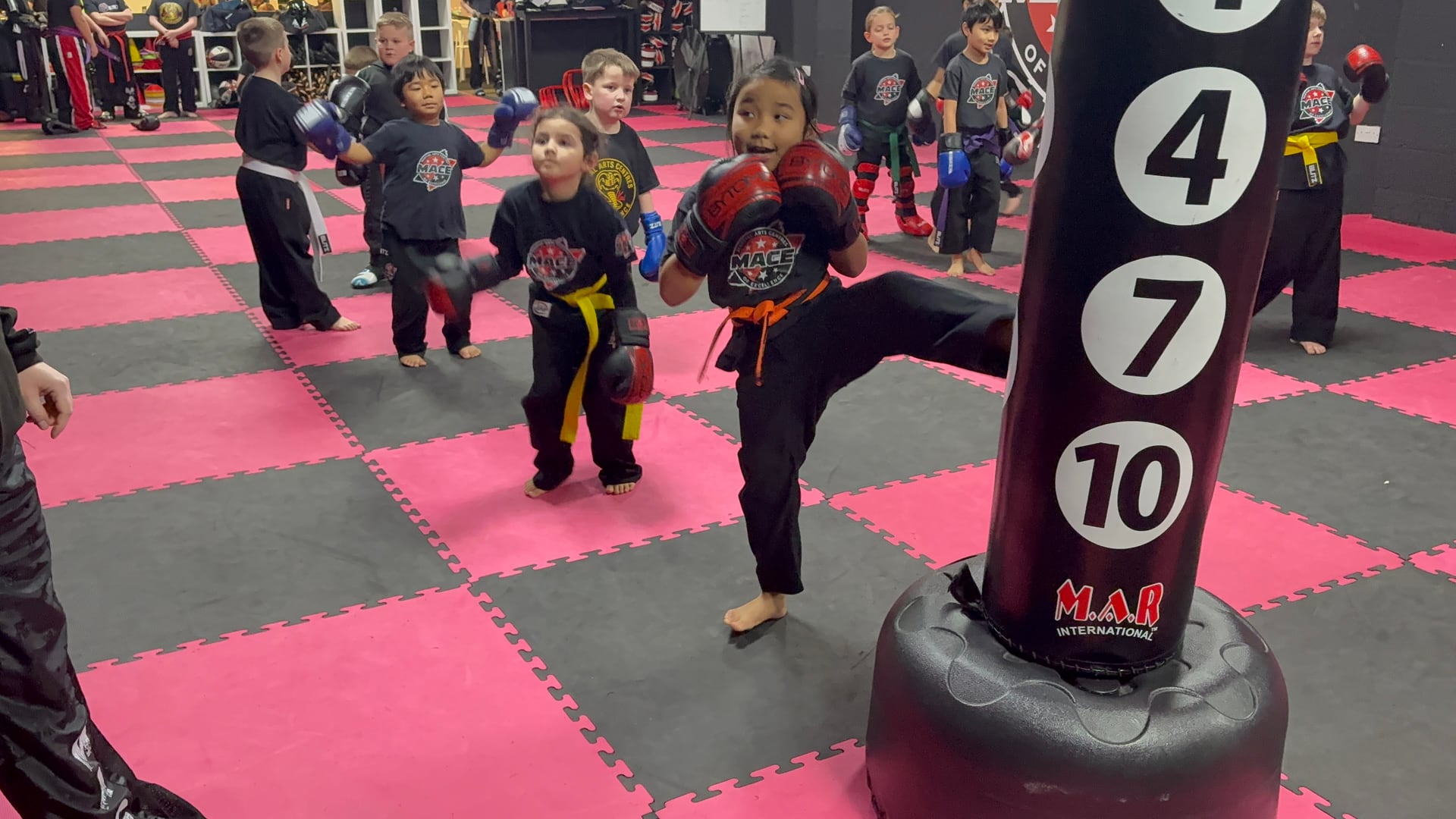
If your child is quiet, hangs back in groups or needs time to warm up, martial arts is not automatically the wrong choice. In many cases, the right class can be a better fit than louder, more chaotic activities.
The mistake is thinking confidence has to come first. Usually it comes later, after your child has had a few chances to do something manageable, repeat it and realise they can cope.
Shy children usually need structure, not pressure
A shy child does not usually need a coach trying to turn them into the loudest person in the room. They usually need a clear routine, realistic expectations and a room that feels safe enough to join.
The NHS-backed Berkshire Healthcare guidance on confidence and self-esteem in movement says children who struggle with confidence often do better when adults keep expectations age-appropriate, reward effort, and create a caring environment with no pressure to hit a standard too quickly. That is a useful way to judge any first class, not just martial arts.
Sport England makes a similar point. Its current children and young people research says positive early experiences help build the foundations for an active life, and that children are more likely to stay active when the experience feels fun, positive and gives them a sense of confidence.
That is why a good beginner martial arts class can work well for a quiet child. Progress is based on listening, trying, repeating and improving. Your child does not need to be outgoing. They need a structure they can trust.
What to look for in a first class
If your child is shy, the first session matters more than the sales pitch.
The current Department for Education guidance for parents choosing clubs and coaching is practical on this point: meet the provider, ask questions, and check that the setting is safe, clean and organised before your child starts. A well-run club should welcome that.
For a shy child, I would look for a few simple things.
Is the coach clear without being overbearing? Are beginners shown where to stand and what to do next? Is the room structured, or does it feel like children are being left to figure it out themselves? Are small wins built into the session? Does the class reward effort instead of only praising the most confident child?
Those details matter. Quiet children often settle when the environment feels predictable. They usually shut down when they feel watched, rushed or compared.
Which MACE class is usually the better fit?
At MACE, the current public programme pages split children by stage rather than pretending one class fits everyone.
Dragons is the younger beginner route for ages 4 to 7. That usually suits children who need shorter instructions, smaller wins and a gentler first step into group training.
Cadets is the current martial arts route for ages 8 to 12. The live page says children are shown the basics step by step and encouraged to work at a pace that feels achievable. For many shy older children, that matters more than whether they look confident from the outside.
The updated UK Chief Medical Officers’ guidance says children and young people should average at least 60 minutes of moderate-to-vigorous activity a day across the week, and it explicitly includes after-school activities, play and sports in that picture. A class like martial arts can support that weekly routine, but only if your child actually feels able to keep coming.
If your child prefers a more direct striking format, Kids Boxing may also be worth comparing. If you want the wider class-choice checklist, this guide on how to choose the right martial arts class for your child will help.
What this means for West Bromwich and Sandwell parents
For parents in West Bromwich, Smethwick, Oldbury, Wednesbury, Tipton, Great Barr and the wider Sandwell area, the practical move is not to ask whether shyness disqualifies your child.
Ask whether the first class gives them a fair chance.
At the current West Bromwich location, the public programme pages repeatedly emphasise a clear, friendly and properly coached first session. That is the right standard to look for. A shy child may still stand close to you at first. They may still watch more than they do in the opening minutes. That is not failure. It is information.
What you want to see is whether the room helps them settle, whether the coach notices them without spotlighting them, and whether they leave feeling more capable than when they arrived.
Your next step
If your child is shy, do not try to solve the whole question from the sofa. Use the Free VIP Pass and tell us their age, confidence level and what worries you most about the first class.
We can point you towards the right starting point at MACE and let you see the environment for yourself. That is far more useful than guessing whether a quiet child is “the type” for martial arts.